
Managing Blood Sugar: The Science Behind Easier Weight Management

Introduction
Why is the scale so inaccurate with diabetes? This is because blood sugar and weight management are two concepts that cannot be separated. The approach to preventing long-term complications is simply effective glucose control, not a mismatched approach to weight loss. With normal blood sugar, your body can utilise stored fat to generate energy effectively. Thus, you do not experience severe cravings and do not store excess calories as fat. This balance is therefore vital to master to achieve more health and wellness objectives.
The Blood Sugar-Weight Seesaw: A Biological Explanation
.jpg)
In cases where blood sugar levels rise immediately after a meal, the pancreas releases insulin to control glucose levels. The primary function of insulin is to transport sugar into your cells for energy.
But when an individual chooses to eat a constantly high-carb diet, it causes a persistently high level of insulin. This hormonal condition tells your body to accumulate surplus energy in the form of fat and, most importantly, to prevent the fat stored from being burned up.
This, in turn, forms a biological seesaw, as when insulin is high, it not only causes fat storage but also inhibits your capacity to burn the stored fat, thus making weight loss very hard.
Why is there weight loss in diabetes?
With uncontrolled diabetes, the body lacks energy even when the blood glucose levels are elevated. Since there is no insulin or a non-functional insulin, cells are unable to utilise this glucose as their fuel.
The body needs to find another source of energy to survive. It ruthlessly burns off its fats and muscles. This metabolism process not only generates energy, but it also leads to the unhealthy and rapid loss of fat and lean muscle mass.
What is more, kidneys overwork to remove excess sugar with urine, which also leads to losing calories and water weight, which also makes the person drop on the scale.
Will diabetes cause weight gain?
Weight gain in type 2 diabetes is partially caused by insulin resistance. The cells in the body do not listen to the message that insulin sends them, and therefore, the pancreas produces excessive amounts of this hormone. Being an insulin hormone responsible for fat storage, excessive insulin levels influence the excess calories being stored in fat tissue, binding up the energy and making it hard to lose weight.
This forms a vicious circle: the insulin resistance increases as weight increases and subsequently requires more and more insulin, causing weight gain to be further increased.
Intensive insulin therapy seems to lead to weight gain among patients with the diabetes type 1 diabetes. The organism is effective in storing the calories that were lost earlier in the urine. Also, defensive snacking to avoid low blood sugar (hypoglycemia) may add considerable calories.
Why is Weight Management So Important for Diabetics?
The Critical Benefits of Weight Management
Weight management is one of the keys to health in the case of diabetes. It enhances the insulin sensitivity dramatically, permitting your body to utilise its natural insulin more efficiently to maintain your blood sugar levels. The main objective of diabetes treatment is to achieve better metabolic control.
Also, losing weight will greatly ease the load on your heart. This reduces the chances of contracting severe cases such as heart disease and stroke, which are among the main concerns of diabetics. This preventive measure has the potential to reduce your reliance on drugs as well.
Finally, the effect of proper weight management is improved daily energy and an immeasurably better overall quality of life, making you stronger and more active, and contributing to your life.
Weight management is an effective health-enhancing tool among people with diabetes. Studies have also established that a mere 5-10% of weight loss can greatly lower the level of HbA1c, which minimizes the chances of severe complications. This degree of weight loss also drastically increases the sensitivity of insulin, enabling the body to utilise its own insulin more efficiently. As a result, a lot of patients will be able to have improved blood sugar control using fewer medications.
Global Perspectives: Case Studies in Diabetes and Weight Management
Purpose
The innovative and evidence-based approaches to this global challenge are addressed throughout the world. The pre-diabetes detected in Japan through its Specific Health Checkups is proactive and therefore allows an early lifestyle intervention. In the meantime, the adoption of GLP-1 drugs into the national health system of Denmark is an illustration of a working model of pharmacological interventions in ensuring sustainable weight and blood sugar control. These case studies illustrate that successful solutions are being carried out in dissimilar cultural and medical settings.
Case Study 1
The NHS in the UK actively screens patients who are at risk to join organised weight management initiatives, and they have been incorporated into the primary care to prevent type 2 diabetes.
The national prevention programme in Finland involved mobilising whole communities, and it actively invited citizens to improve their nutrition habits and physical exercise.
The two countries prove that it is possible to use lifestyle intervention-based public health programmes that will lead to the prevention of diabetes and better weight control among people.
Case Study 2:
The US and Australia are also at the forefront of utilising GLP-1 agonist drugs, which are transforming the management of type 2 diabetes and obesity by facilitating a lot of weight loss and enhancing glycemic levels.
At the same time, the two countries are adopting digital health apps that are integrated to monitor nutrition, fitness, and medication compliance to develop a powerful, data-driven personalised approach to patients.
It is a pharmacological and digital solution that is creating a new international paradigm of effective, holistic management of chronic diseases.
Case Study 3:
The fast urbanisation and economic development have changed the traditional diets to high-calorie and processed foods, which lead to obesity and type 2 diabetes.
Examples of unique challenges are the cultural preference for white rice and genetic inclination towards visceral fat.
Effective interventions include cultural adjustments to the meal plan, the encouragement of small portions of rice to be eaten with lean protein, and local vegetables.
To curb these emerging health menaces, the current emphasis of the public health programmes is on heightening nutritional awareness.
Case Study 4:
The Nordic countries are the promoters of a unified, patient-centred model of healthcare.
Their combined diabetes guidelines emphasise lifestyle interventions as the treatment option of priority.
Education, individual nutrition, and exercise are actively encouraged by healthcare professionals.
This system-wide prevention and holistic care empowerment of individuals helps to postpone or minimise the use of medication and ultimately enhances long-term health outcomes for the population.
Case Study 5:
France and Switzerland are two countries that are actively practising dietary education as an essential aspect of their healthcare policies towards diabetes and weight management.
Programmes are aimed at equipping individuals with nutritional knowledge to achieve long-term and sustainable changes throughout their lifetime.
In this medically-controlled system, special equipment such as Glucerna is occasionally incorporated.
It can be used by healthcare professionals as a meal substitute in the form of a partial meal to aid in glycemic regulation and help in managing calories as a part of a structured plan.
Case Study 6:
Canada and New Zealand boast highly individualised care plans in the management of type 2 diabetes and weight.
Their guidelines advocate clinical approaches that are not a one-size-fits-all method, but rather patient-centred and shared decision-making.
To enhance the results, this approach proactively customises nutritional recommendations, physical activity goals, and prescriptions before considering individual conditions, cultural orientations, and the general health situation.
Strategic Weight Management for Diabetes Control
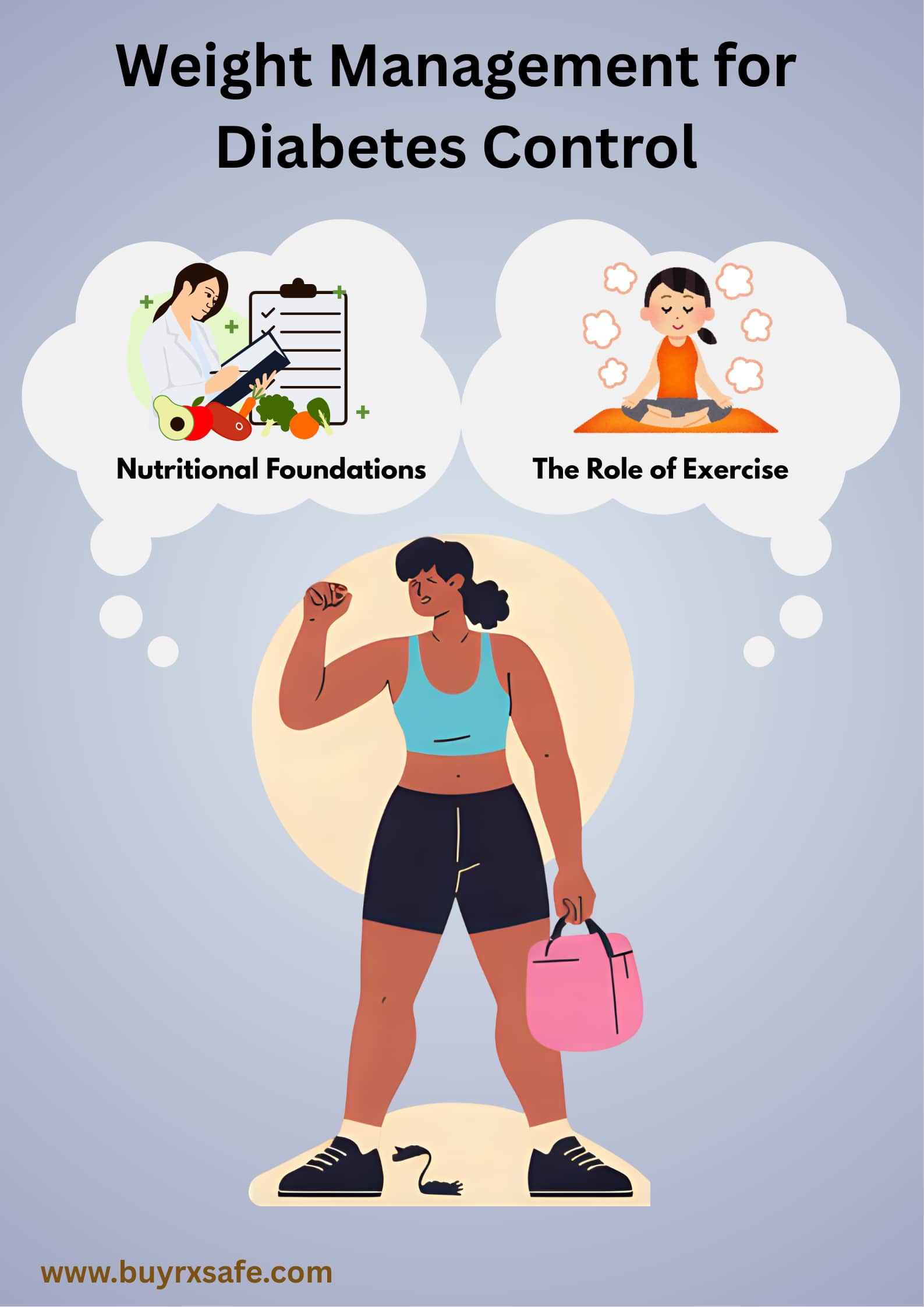
Nutritional Foundations:
Plate up in a way that is strategically recommended; this is the tactic to use non-starchy vegetables, lean proteins such as fish and poultry, high-fibre whole grains, and healthy fats, such as avocados and nuts; this will directly control your blood sugar and ensure a sustained level of satiety.
Eat a systematic, balanced diet like the Mediterranean or DASH diet, which offers a very good model of healthy eating; both of them inherently help control body weight and enhance insulin sensitivity.
Eat high fibre foods together with lean protein actively at each meal so that you can drastically slow down the rate of glucose absorption, avoiding those sudden spikes in blood sugar levels and prolonging your fullness, lowering total calorie consumption.
It is worth keeping in mind that consistency is the most important element of your selected plan because long-term healthy eating creates successful, lasting weight loss and dramatically changes the diabetes results.
Addressing Weight Extremes:
In diabetic patients who are required to increase their weight, pay attention to foods that contain a lot of nutrients. Eat healthy fats (avocados, nuts) and lean proteins (strategically integrated in the meal). Homemade protein shakes can be considered additional calories without the use of branded weight-loss products, which will stabilise the blood sugar.
When losing weight, embrace effective practices. Have very tight control of portions and regular carbohydrate counting in order to control glucose. Set aside mindful eating to avoid overeating and only take into account methods such as intermittent fasting with direct medical supervision to protect against safety and effectiveness.
The Role of Exercise:
Weight management is a vital aspect of the management of diabetes, as strategic weight reduction is very important because it goes hand in hand with insulin sensitivity. Exercise is a vital necessity since it has a direct effect on enhancing the way your body responds to insulin. To achieve the best outcomes, one should do aerobic exercises such as brisk walking together with resistance, such as weightlifting. This is because this potent combination not only assists in weight management, but also in the development of muscle, which is an active activity that pulls glucose in your blood to use effectively to manage your glycemic level.
Medical and Supplemental Support:
Diabetes can be managed by strategic weight management. GLP-1 receptor agonists and SGLT2 inhibitors are new drugs that can be potent partners and actively aid in weight loss since they are also able to improve the level of blood sugar.
Meal replacement shakes such as Glucerna should be used to control portions against the nutritional needs and supplemented with necessary nutrients. Nonetheless, these products have convenience, but as far as the long-term sustainability of nutrition and diet is concerned, whole foods are generally better.
The combination of these tools is always more effective when they are combined with the help of your health care provider to provide a personalised plan that will help achieve your health objectives.
Behavioural Change:
Weight management is important in the management of diabetes. Contemporary medicines such as GLP-1 receptor agonists and SGLT2 inhibitors may be strong partners, because they actively induce weight loss besides enhancing the level of blood sugar. To support good nutrition, meal replacement shakes such as Glucerna provide portion control and have essential nutrients that support good nutrition. Nevertheless, the convenience of these foods is that whole foods are usually better and sustainable in terms of nutrition and diet over the long run. To achieve your health objectives, always seek advice from your healthcare provider in order to design a personalised plan of utilising the tools effectively.
Putting It All Together: Your Action Plan
The people you most need to partner with to safely and effectively lose weight are your healthcare people, who can offer individually tailored strategies and support that will directly lead to better diabetes management. Make sustainable behaviours such as healthy eating, exercise, and taking medication regularly, because even a small loss in weight can contribute substantially to blood sugar levels. Keep in mind that this is not a place of health. It is a lifetime plan. Also, the main thing is to be consistent in what you are doing, rather than looking for perfection, because every good decision can lead to long-term well-being.
Conclusion
The art of the knowledge of the science of blood sugar and weight is your beginning step to actual control. This information is a direct focus to enable you to make better nutritional decisions, and thus it is the way out of the craving and fat-storing trap. Through self-care management of your blood sugar, you exercise direct control of your blood sugar and energy. After all, you are not only working on a figure on the scale, but you are actively ensuring your future health and viability.