
Cabolong 60mg
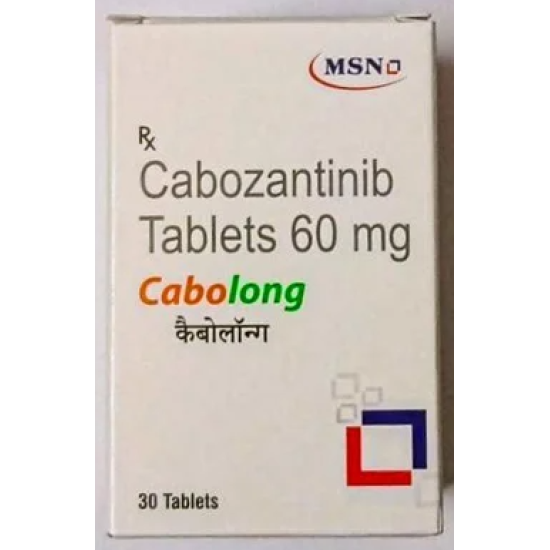
- Stock: In Stock
- Brand: MSN LABORATORIES PVT LTD
- Model: Cabolong 60
- SKU: CBLNG60
- Active Ingredient: Cabozantinib
- Treatment: Cancer
- Alcohol: Do not drink
Available Options
Introduction to Cabozantinib (Cabolong)
Cabolong (cabozantinib) is a targeted cancer drug that blocks the action of certain cancer-growing proteins. Its main use by doctors is to fight against advanced renal cell carcinoma and hepatocellular carcinoma. The action is by actively inhibiting the effect of enzymes which promote tumour growth and the formation of blood vessels. Cabolong is given when the patient takes it in the form of a tablet daily, and the team of health care providers is on high alert to observe side effects that may arise. This drug will be an imperative addition to the battle against these particular cancers.
What is Cabozantinib Used For?
Cabolong (Cabozantinib) is a targeted therapy that is referred to as a tyrosine kinase inhibitor (TKI). It acts by actively inhibiting the activity of certain enzymes, or tyrosine kinases, transmitting growth signals to cancer cells. Cabozantinib suppresses two important processes by blocking these two types of signals: it suppresses tumour cell growth as well as prevents the development of new blood vessels that supply the tumour (angiogenesis). This two-fold action process can slow or prevent any further development of cancer, and in some cases, it can reduce the blood circulation of the tumour, which results in its downsizing.
Primary Indications:
Cabazitaxel (under the name Cabolong) is an introduction to this drug and its main applications.
Cabozantinib is mainly prescribed by clinicians in the treatment of advanced Renal Cell Carcinoma (RCC), which is a widely known type of kidney cancer.
It also serves as a routine therapy among patients having Hepatocellular Carcinoma (HCC) who had been treated with sorafenib previously.
Cabozantinib proves to be very effective against certain Thyroid Cancers, especially progressive, differentiated thyroid cancer (DTC) that is not sensitive to radioactive iodine anymore.
Its use in other malignancies, such as some lung cancers and neuroendocrine tumours, is also under investigation by researchers.
The drug acts by suppressing several tyrosine kinases that are important proteins that promote the growth, angiogenesis, and metastasis of cancer cells.
Cabozantinib 60 mg Dosage
Cabozitaxel is administered as oral pills to be taken easily every day. The usual initial dosage in most patients is a 60 mg tablet to be taken daily. This particular dosage is the traditional first-line therapy in the treatment of advanced Renal Cell Carcinoma (RCC), where its effectiveness has been proven to be quite effective.
The capsule must be ingested on an empty stomach, i.e. you should not have something to eat at least two hours prior to and one hour after taking your dose. By following such a schedule, you make your body absorb the medication correctly.
Any dose should be strictly controlled in the eyes of your healthcare provider, who will look after such side effects. They can either increase or decrease the dose, or they can give supportive care to help you overcome adverse reactions that you experience in the treatment.
Therapeutic Efficacy & Kinetics
How Quickly Does Cabozantinib Work?
A clinical benefit can be observed in patients receiving cabozantinib in a few weeks. Although it may take a long time to achieve a confirmed objective response, the first indications of disease stabilisation or tumour shrinkage can usually be noted in the first two to three months. Clinicians use regular imaging scans to track the drug kinetics and measure the initial response to determine whether it is effective in therapy or not.
Duration of Effect and Treatment
Cabozantinib is an agent that acts to manage the disease until it becomes intolerable. Several months to years of disease control can be experienced in many patients, and the length of time in individuals depends on the type of cancer and response.
Cabozitaxel can be used indefinitely by patients so long as it is effective in keeping the cancer at bay and the side effects are manageable. This is not a short-course treatment but a long-term commitment.
Treatment will, however, cease in case the cancer advances or in case the toxicities are unpleasant and incurable. The oncology team never decides whether to discontinue or not, as they all depend on scans and the health condition of the patient.
Pharmacokinetics
The elimination half-life of cabozantinib is about 99 hours. It is equal to approximately 99 hours that your body needs to decrease the plasma concentration of the drug by half. Cabozantinib, therefore, sticks around your body and it can take weeks to clear completely; a typical of 21 days before it finishes clearing your body when you take the final dose. The drug is highly metabolised in the liver and then excreted.
Special Considerations
Cabozantinib shows great promise as a therapeutic agent against disease sites that are secondary, like brain metastases. The drug's peculiar inhibition profile makes it possible for it to reach the site through the blood-brain barrier. This, in turn, leads to targeting and inhibiting the growth of the tumour, thus making the patient's condition better. The pharmacokinetics of the drug allow for continued suppression of the tumour in these difficult secondary sites.
Safety Profile and Side Effects
General Cabozantinib Side Effects
The most frequent side effects experienced by patients on cabozantinib include fatigue, loss of appetite, and increased liver enzymes. Common diarrhoea can be managed proactively through drinking plenty of fluids and taking anti-diarrheal medicines as per your health caretaker's instructions. Furthermore, inform your doctor without delay about any strong or long-lasting symptoms because they might have to change your dose to make it more tolerable for you.
Specific Side Effects for the 60 mg Dose
The typical side effects of the 60 mg cabozantinib dose are vascular and fluid retention. Peripheral oedema is one of the most common side effects experienced by patients, and it may show as swelling in the legs and feet that can be seen easily. A rather specific and common reaction apart from this is palmar-plantar erythrodysesthesia, where the patients suffer from redness, swelling, soreness, and peeling skin on the palms and soles of their feet. Management of these effects is done proactively, and this is necessary if the patient is to continue with the treatment.
Drug Interactions and Lifestyle
Patients undergoing cabozantinib therapy should definitely not drink alcohol. The main reason is that the liver is a primary site for drug metabolism, and especially for anti-cancer drugs; their action can be extremely toxic. Alcohol may not only amplify the severity of common cabozantinib side effects - nausea and fatigue - but also slow down the recovery process. You should consult your doctor about alcohol consumption during your treatment to ensure your safety.
Patient Information and Administration
Prescribing Information
You should only use Cabozantinib 60 mg capsules according to your doctor's instructions. The capsules should not be opened or broken but swallowed whole on an empty stomach than at least an hour after the last meal. This intake keeps a regular amount of the drug in your system, which is very important for the drug to work. In case you forget to take a dose, do not make up for it by taking an extra one. Rather, get in touch with your healthcare team right away to know what to do.
Monitoring During Treatment
Your well-being is being closely observed by our doctors during the whole period of your treatment. Blood pressure and lab tests will be done regularly on you. These measures help us to monitor with precision your body's reaction and to guarantee your protection. All findings and possible changes in your treatment plan will be communicated to you without delay.
Conclusion
Cabozantinib (60 mg) is an essential medication that specifically aims at cancers of the kidney, liver, and thyroid at advanced stages. Its mechanism of action involves the inhibition of specific signalling pathways that are responsible for tumour growth and blood supply formation. Nonetheless, the treatment is very effective, but at the same time, it requires the active supervision of its possible side effects. Open and ongoing communication between the patients and the healthcare team regarding the adverse effects is a prerequisite for the successful management of symptoms and the duration of treatment, as well as the overall effectiveness being maximised to obtain the very best outcome for your unique cancer journey.
-250x250w.jpg "Tapfree er 100mg")